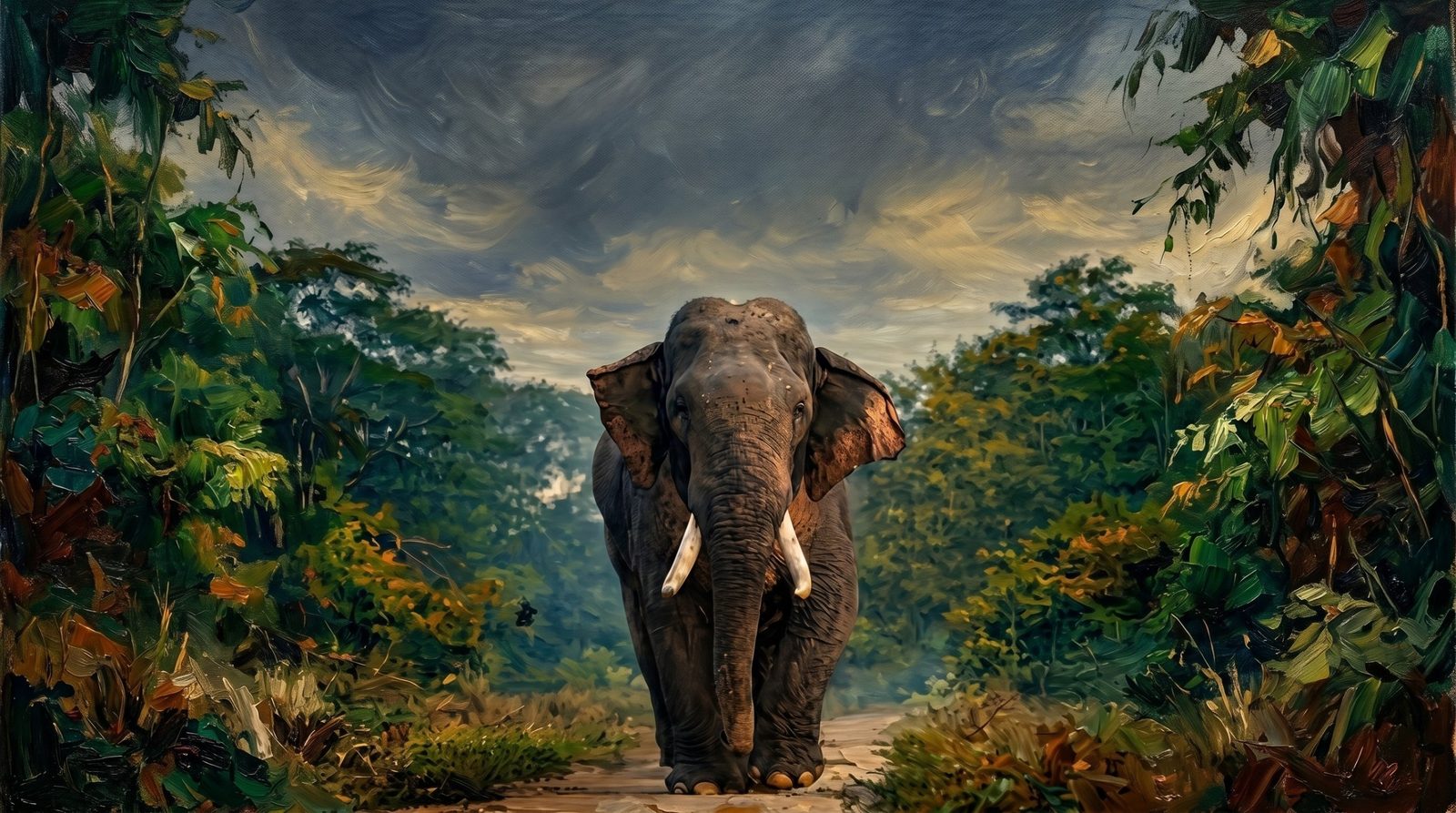
Sri Lanka has more Asian elephants per square kilometre than almost anywhere on earth. Yet its most iconic genetic lineage is close to collapse.
The Sri Lankan elephant (Elephas maximus maximus) is the largest of the three Asian subspecies. It has the darkest skin and the highest rate of tusklessness. Centuries of colonial trophy hunting and commercial ivory poaching removed the largest tusked bulls from the gene pool.
Today only a small share of Sri Lanka's wild male elephants carry tusks. On the Asian mainland, tusked males are far more common. Here, every tusker is rare. When one dies, that branch of the family tree ends for good.
Who was Kawanthissa?
Kawanthissa was widely recognised as Sri Lanka's tallest and largest living wild tusker. He ranged through the dry zone forests and tank beds of the North Western Province, around Galgamuwa, Siyambalangamuwa, Maho and Nikaweratiya.
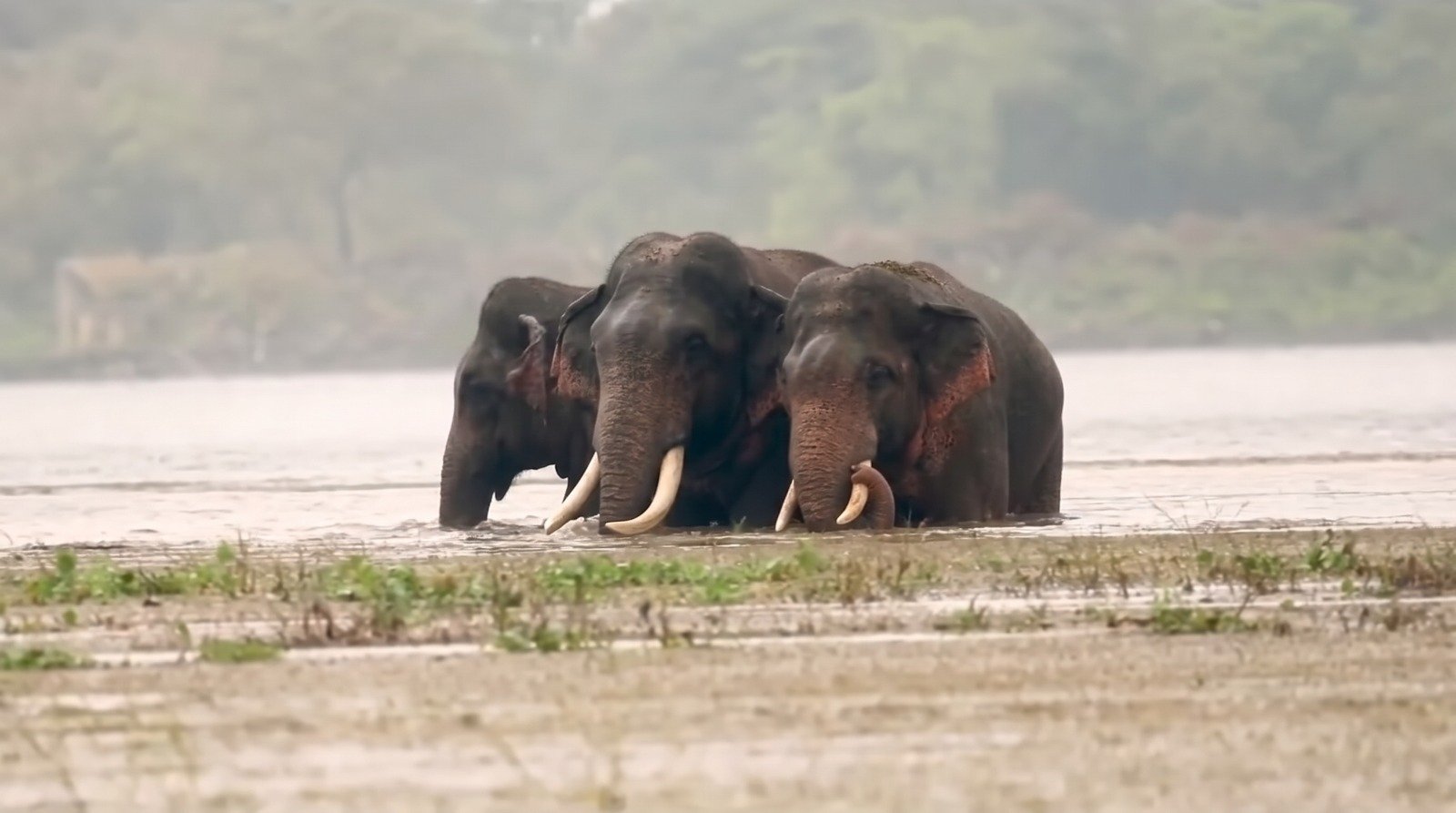
Locals describe him as peaceful. They say he avoided crop raids and moved carefully around people. One story from the Kasikote junction on the Padeniya to Anuradhapura road is told again and again. A local man would step onto the road and hold back the traffic when the giant came to cross. The tusker would stop at the edge of the tarmac, raise his trunk, and walk into the forest on the other side.
He is said to have travelled with two other bulls, Chandi and Raghu, who stayed close to him when he crossed farmland. Chandi died in 2024.
What happened
In late September 2026, people saw Kawanthissa limping badly near Siyambalangamuwa. He had a reported gunshot injury to his right front leg. The Department of Wildlife Conservation sent veterinary teams to treat him.
He collapsed in a paddy field and died on 16 October 2026. A magistrate ordered a post-mortem, and samples went to the Faculty of Veterinary Medicine at the University of Peradeniya. On 18 October, the Ministry of Environment filed a complaint with the police and the CID. It asked them to investigate whether a wider plot has been killing wild elephants. At the time of writing, no findings, suspects or arrests have been reported. The President also appointed an independent expert committee to examine the death and draft procedures for treating injured wild elephants.
The exact cause of death has not been confirmed. We will not guess.
The argument about his treatment
His death started a national argument. Some animal welfare groups and activists questioned how he was treated. They asked whether heavy antibiotic use harmed his digestion and appetite, and they called for an independent post-mortem.
Veterinary experts point to how hard it is to treat a wild bull in the open. An elephant this old has little reserve. About 60 percent of the body weight sits on the front legs, so a shattered front limb is very hard to heal. An elephant cannot lie on its side for long, because its own weight presses on the lungs. And a bull in musth is dangerous to sedate, because of the strain on the heart.
The post-mortem and the committee will decide which of these views the evidence supports. We have not seen their findings.
A memorial to Sri Lanka's lost tuskers
Kawanthissa is one of many. Here are twenty-nine of the great tuskers we know have died or vanished. Most were killed by people. A few died in fights with other bulls, and for several of the older Yala bulls nobody recorded what happened. For many, the sources give only part of the story, and each card says what is and is not confirmed.
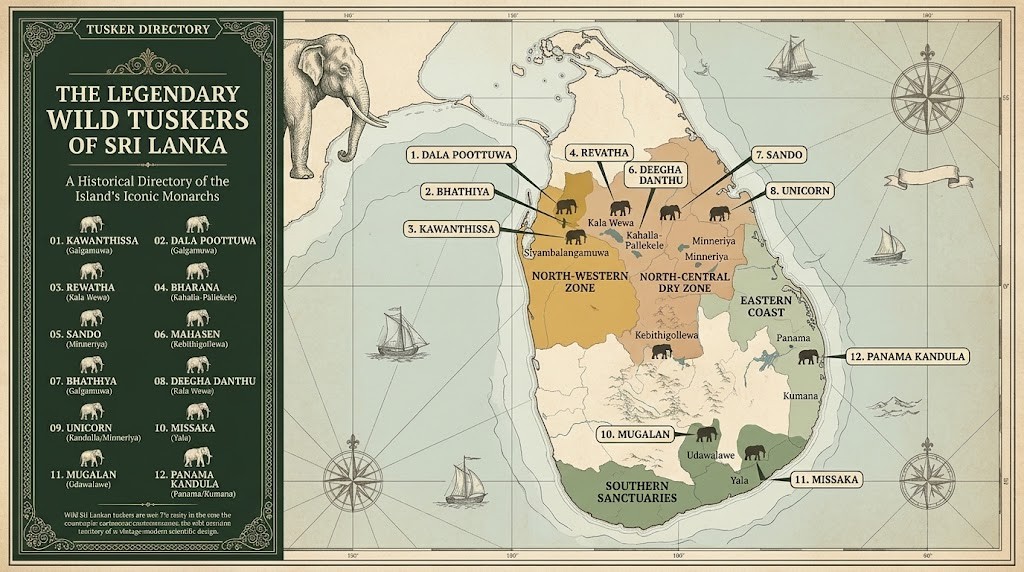
- Galgamuwa and Siyambalangamuwa. Kawanthissa, Siyambalangamuwa Maha Etha (Parakrama), Thekka Raja, Bhathiya, Chandi
- Kala Wewa and Kahalla-Pallekele. Rewatha, Bharana, Sando, Mahasen, Digha Danthu, Dhatusena, Walagamba, Mahathanilaya
- Minneriya. Unicorn
- Kebithigollewa and Padaviya. Maheshakya, Danuddara
- Udawalawe. Mugalan
- Yala and Kataragama. Missaka, Thilak, Kublai Khan, Genghis Khan, Star, Walas Keme Etha, Yala Raja, Maha Poottuwa, Podi Poottuwa, Kobbekaduwa
- Panama and Kumana. Kandula Dala Poottuwa (Panama Kandula)
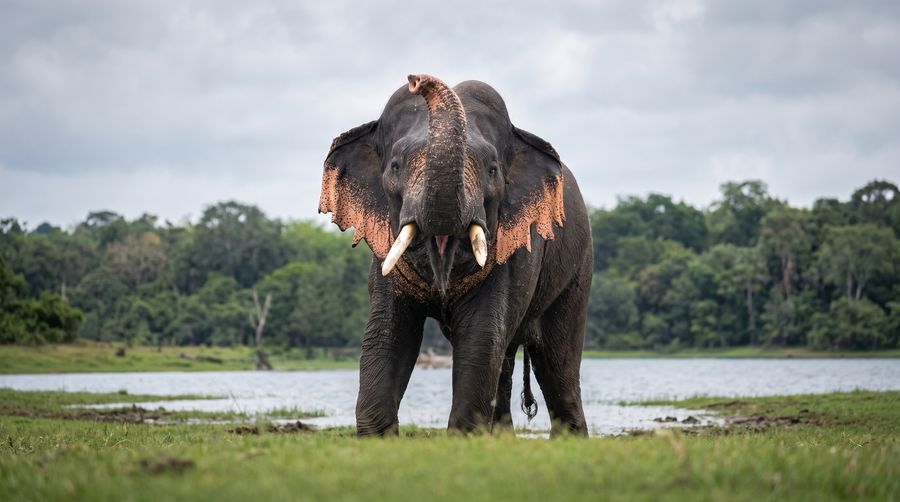
Rewatha
45 to 55 years at death
The pride of Kala Wewa National Park, bearing tusks roughly 3.5 feet long. A gentle tusker who never attacked humans and remained a major draw for visitors.
- Cause of death
- Electrocution from an electric fence
- Incident
- 9 March 2021, on farmland in the Aliyawetunuwewa area, Kekirawa
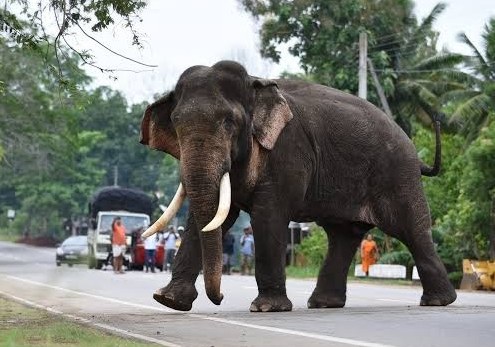
Kawanthissa
45 to 50 years at death
Recognised as Sri Lanka's tallest and largest wild tusker.
- Cause of death
- Leg wound and physical deterioration. The post-mortem result is pending.
- Incident
- 16 October 2026, Galgamuwa
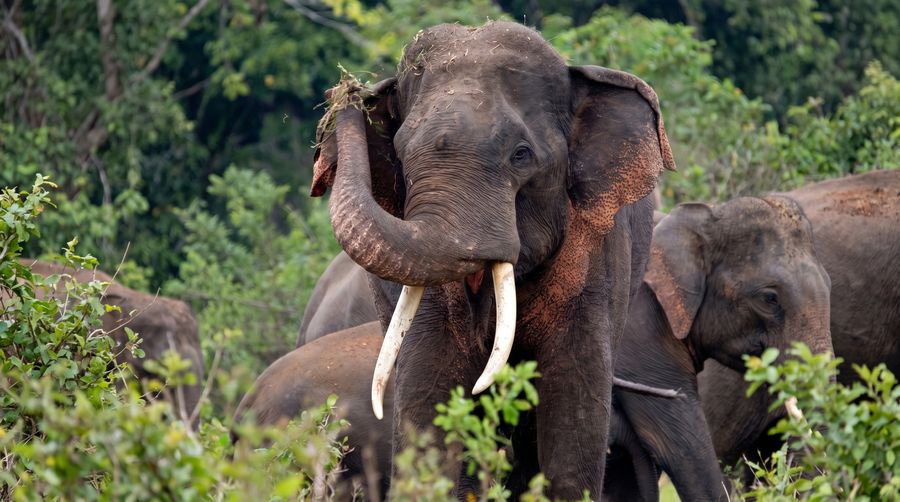
Bharana
55 to 60 years at death
Roamed the Kala Wewa and Balalu Wewa basins. Renowned for his imposing frame, majestic appearance and calm temperament around tourists.
- Cause of death
- Electrocution from an electric fence
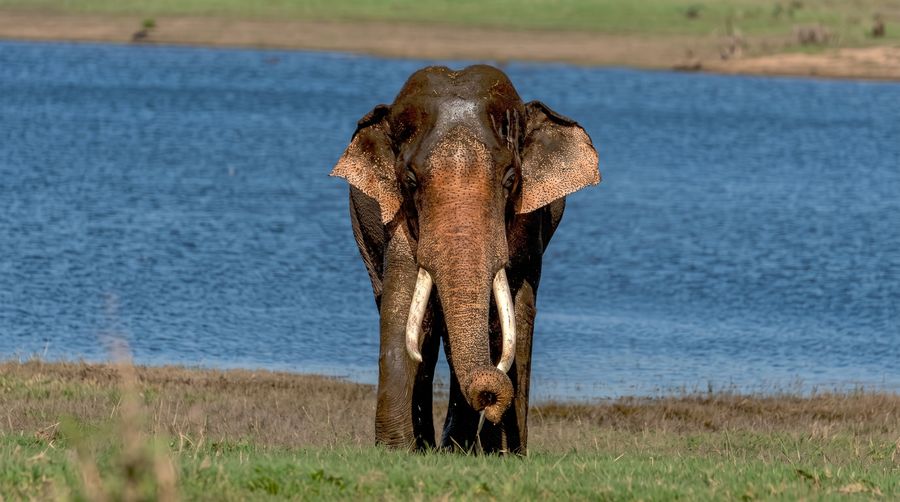
Sando
40 to 45 years at death
Known as the Prince of Ruhuna. He claimed Yala National Park and the Buttala region as his home territory. Wildlife officials called him the Warrior Tusker of Ruhuna for his fearless temperament, massive build and majestic posture.
- Status
- Missing, presumed dead according to wildlife records
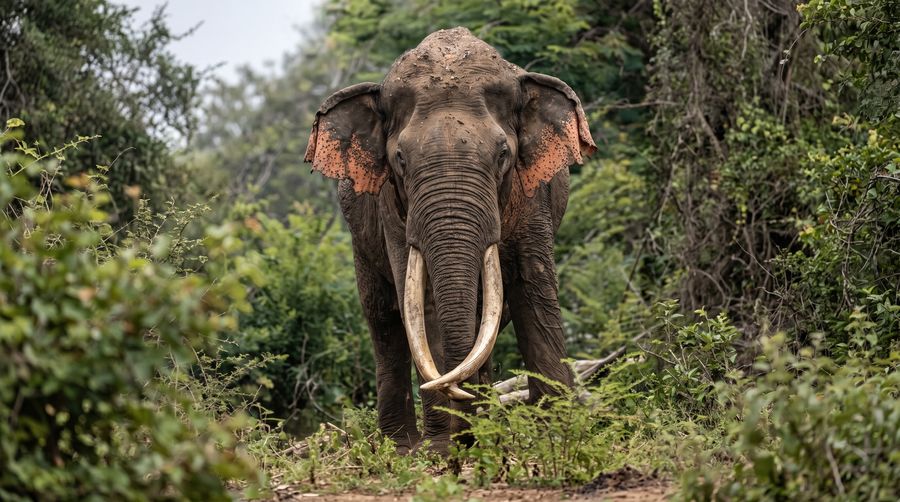
Mahasen
Estimated near 60 years
Celebrated for his massive body and a pair of very long, downward-curving tusks.
- Status
- Missing for several years
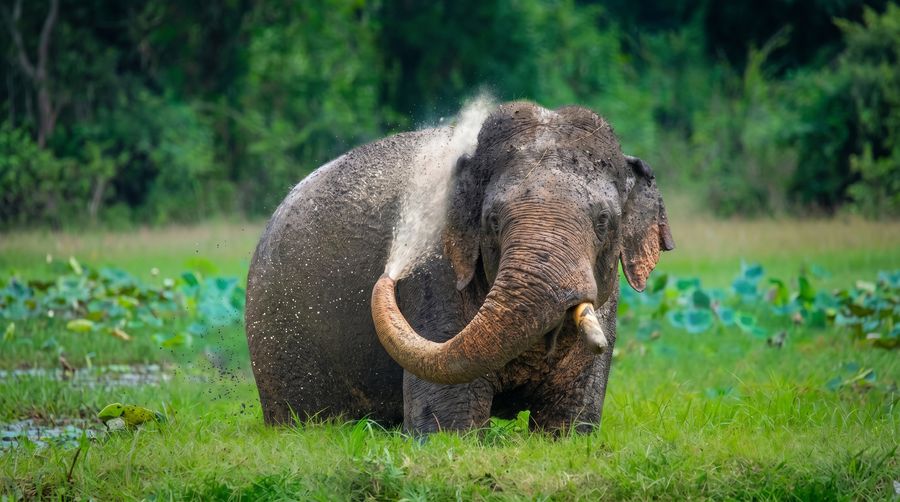
Chandi
45 to 50 years at death
Frequented the Kala Wewa area. Stood out for his large body, striking appearance and gentle behaviour toward people.
- History
- Wildlife officials translocated Chandi more times than any other elephant in Sri Lanka. He broke through every barrier and returned to his home territory every time.
- Incident
- 7 October 2024, in the forests of Kala Wewa and Balalu Wewa
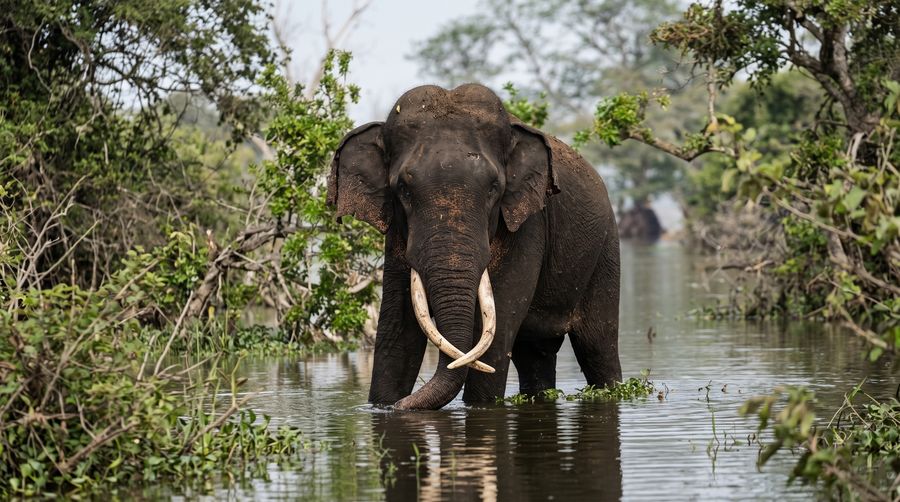
Dala Puttuwa
50 to 55 years at death
An iconic tusker known for his rare crossed tusks.
- Cause of death
- Shot by ivory poachers
- Incident
- November 2017. Authorities found the carcass in late November.
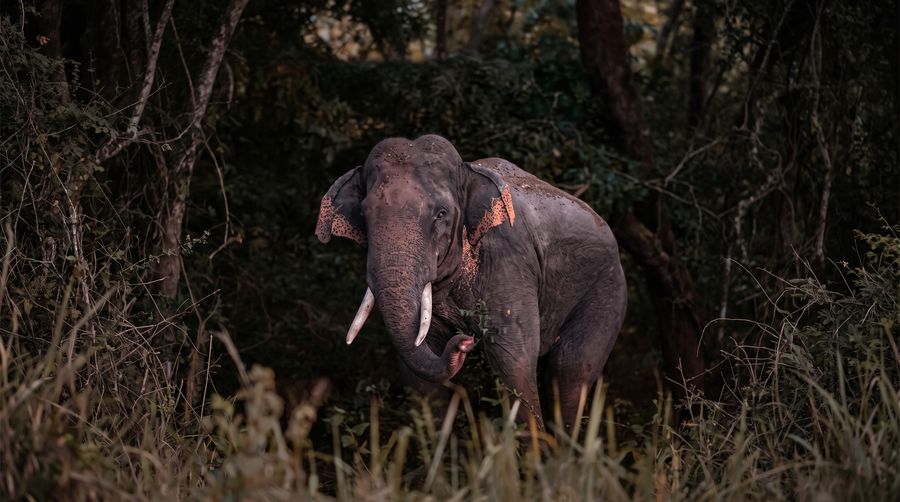
Bhathiya
25 to 30 years at death
Extremely gentle and friendly toward humans. One of the last remaining tuskers in his region.
- Cause of death
- Gunshot wounds and severe leg complications
- Incident
- 15 July 2025
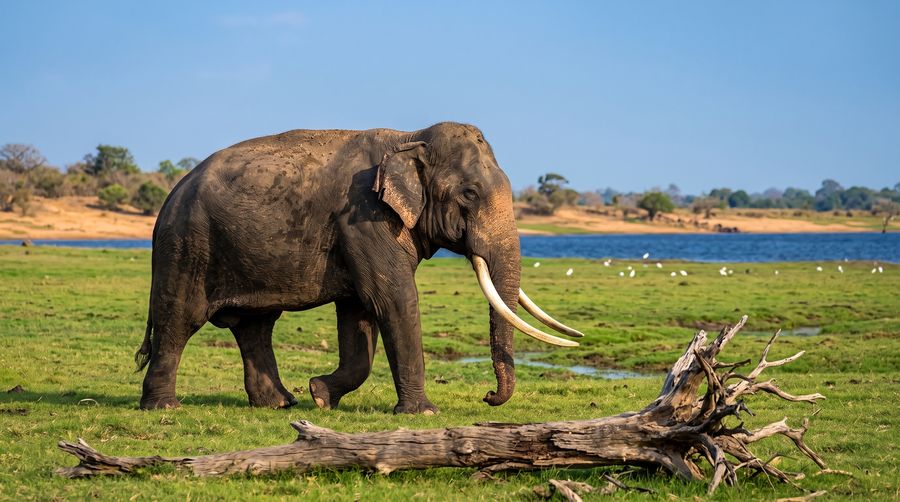
Digha Danthu
45 to 50 years at death
Carried long, curved tusks and lived around Kala Wewa and Balalu Wewa.
- Cause of death
- Electrocution from an illegal electric fence
- Incident
- 27 November 2024, in the Inguruwewa area of Adiyagala, Kekirawa
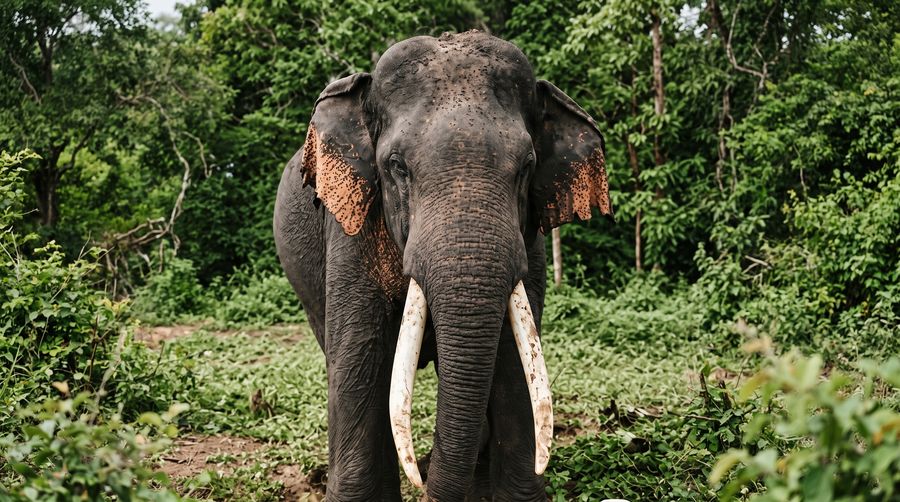
Siyambalangamuwa Maha Etha (Parakrama)
About 40 years in the 2010 press reports. Other accounts give an older age.
Widely known as Parakrama. A tall, shy bull of the Galgamuwa and Siyambalangamuwa forests, carrying long, heavy tusks that the 2010 press put at about five feet.
- Cause of death
- Died during capture and transport. Wildlife officers captured him on 22 November 2010 after residents complained of crop and house damage. He died while being moved by truck. The Minister later called the condition of the transport trucks a concern.
- Incident
- November 2010, Siyambalangamuwa forest and during road transport
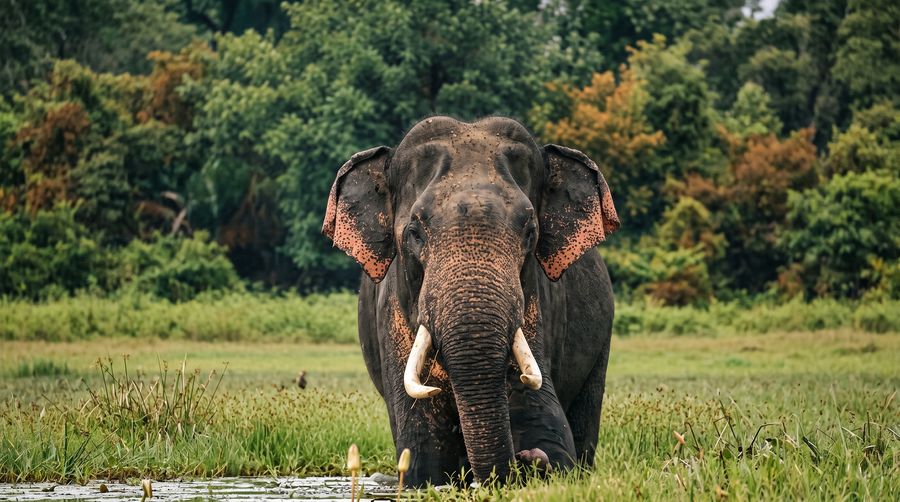
Missaka
Age not confirmed in press reports
A well-known tusker of Yala who was a favourite sighting for safari visitors in Ruhuna.
- Cause of death
- Park authorities said he died after a trap gun injury that lasted over two weeks. Sepsis was reported as the cause.
- Incident
- 19 April 2018, Yala area
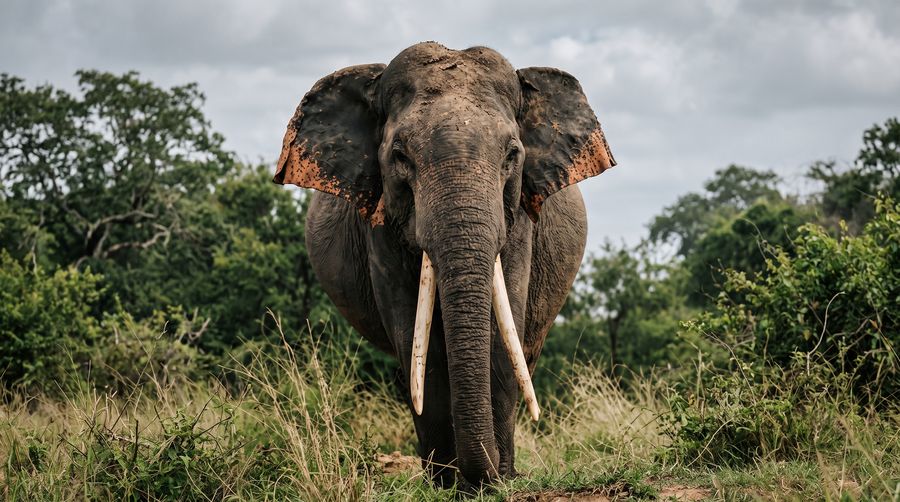
Mugalan
12 years at death
A young tusker from the Udawalawe area who had many breeding years ahead of him.
- Cause of death
- Shot at close range with a muzzle-loader. Police said he was killed for his tusks. Two villagers were remanded and a trap gun was found.
- Incident
- December 2018, Udawalawe
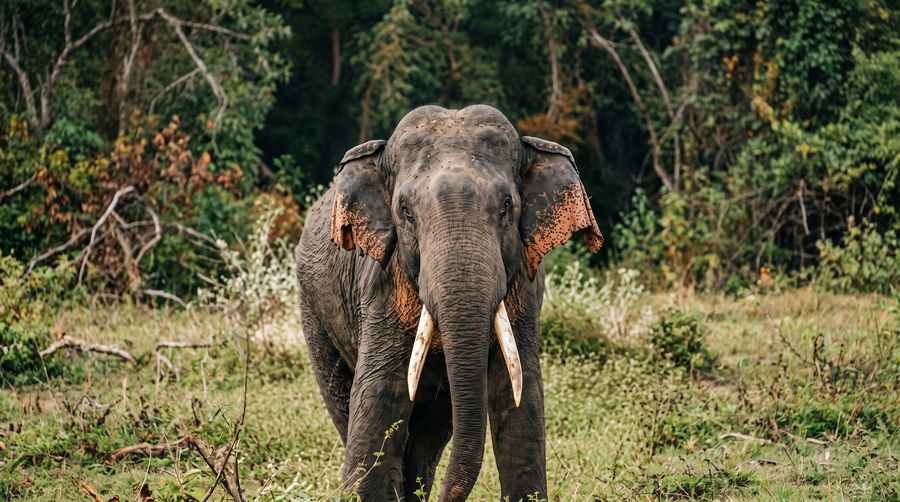
Thekka Raja
40 to 45 years at death
Known as the King of Teak. He ranged over the teak plantations and dry scrub of Galgamuwa and carried four-foot tusks.
- Cause of death
- Gunshot wounds taken on farmland. He was treated in the field, but collapsed and died within a month.
- Incident
- July 2023, Galgamuwa
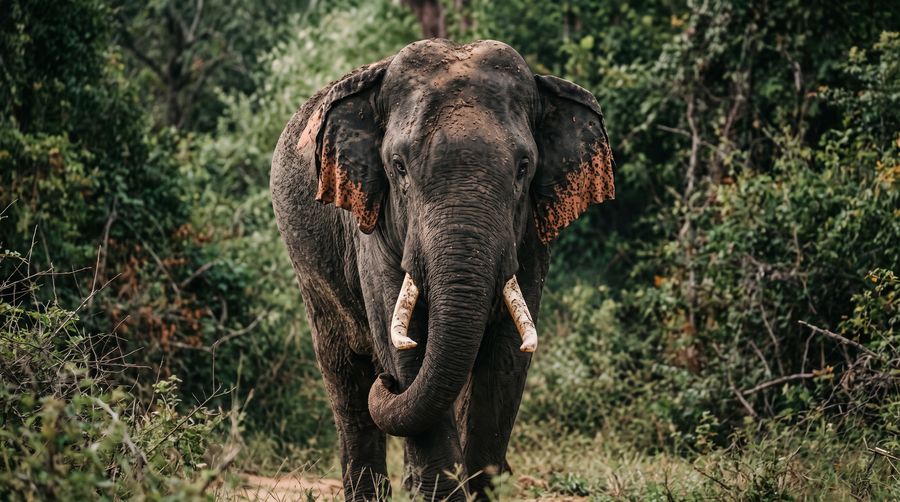
Maheshakya
45 to 50 years at death
Named for his towering build. He roamed the forests of Kebithigollewa and Padaviya and carried sharp, three-foot tusks.
- Cause of death
- Gunshot injuries that turned septic. His limb wounds became infected and he collapsed in the forest.
- Incident
- 2022 to 2023, Kebithigollewa
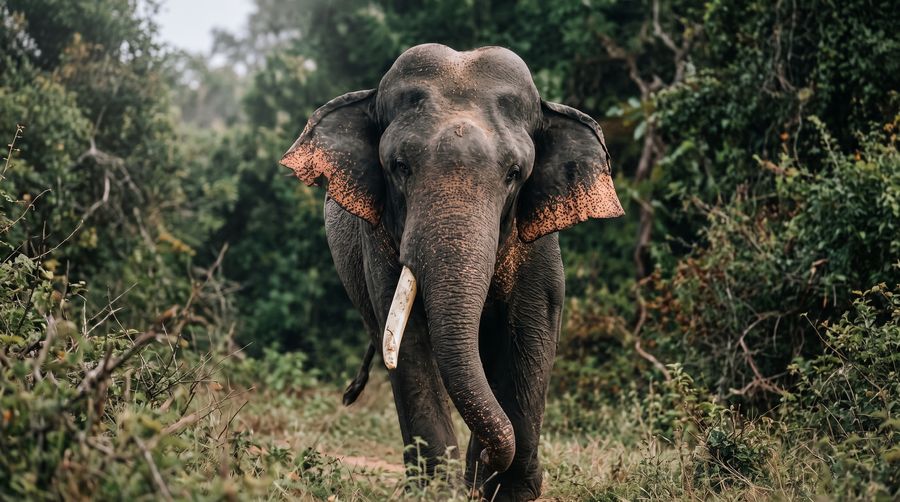
Unicorn
30 to 35 years at death
The single-tusked bull of Minneriya National Park. Visitors saw him each year during the Gathering.
- Cause of death
- Shot dead. The Minister of Environment confirmed in Parliament that he was shot.
- Incident
- 17 March 2025, Minneriya
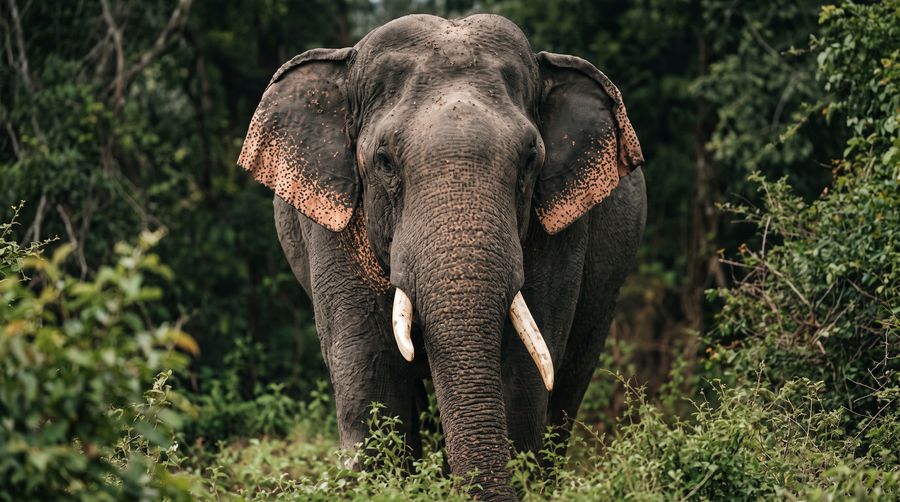
Danuddara
35 to 40 years at death
A dominant bull of Kebithigollewa and the North Central plains. He defended his range across Padaviya and Moragoda.
- Cause of death
- Shot on cultivated land.
- Incident
- March 2025, Kebithigollewa, Anuradhapura District
Walas Keme Etha
Age not recorded
Named after the Walas Kema waterhole in Yala Block 1. Trackers and oral records describe him as carrying the longest tusks seen in modern southern Sri Lanka.
- Fate
- Suspected poaching. He vanished from Yala in the late 20th century. No record confirms how he died.
- Range
- Yala National Park, Block 1
Yala Raja
Mature adult
Regarded as the king of Yala through the 1970s and 1980s. He carried heavy, symmetrical ivory and ruled the Menik Ganga riverbed.
- Fate
- Disappeared during the poaching waves of the late 20th century. His fate is not documented.
- Range
- Yala National Park and Katagamuwa Sanctuary
Maha Poottuwa
Age not recorded
First sighted in the late 1950s in Yala Block 1. He had crossed tusks and a fiery temper, charged safari vehicles, and was one of the most photographed tuskers by the 1970s.
- Fate
- Disappeared in the 1990s. Press accounts record that he vanished, not how.
- Range
- Yala National Park
Podi Poottuwa
Age not recorded
Rose to fame in Yala in the 1970s alongside Maha Poottuwa. He carried a smaller pair of crossing tusks.
- Cause of death
- Killed in 1987 just outside the park. A later account says he was shot.
- Range
- Yala National Park
Kandula Dala Poottuwa (Panama Kandula)
Over 40 years at death
Catalogued as T001 by researchers. He was the last celebrated crossed-tusker of the eastern coastal corridor linking Panama, Okanda and Kumana.
- Cause of death
- Reported to have fallen into an agricultural pit in Panama and died after a crane rescue by army engineers. We could not confirm this in published sources.
- Incident
- Panama buffer zone, around 2007
Star
Mature adult
A well-known tusker of Yala Block 1 in the late 1980s and 1990s.
- Fate
- His ivory is kept at the Yala Park Warden Office. The cause of his death is not recorded in the sources we found.
- Range
- Yala National Park
Kublai Khan
About 28 years at death
First recorded as a six-year-old in December 1987. He grew into a tall bull known for his posture and symmetrical ivory.
- Cause of death
- Not confirmed. His carcass was found at Heen-wewa on 23 August 2009. Veterinarians ruled out gunshot injury. The likely cause was infection after a fight with another bull.
- Incident
- August 2009, Yala National Park
Genghis Khan
Senior bull
A large, dominant tusker of Yala in the 1980s. He was seen feeding at Uraniya with the young Kublai Khan in March 1988.
- Fate
- Cause of death is not recorded in the sources we found.
- Range
- Yala National Park
Thilak
About 55 years at death (one estimate)
The largest and oldest tusker in Yala in his last years. He was calm and let visitors watch him close up. There is no record of him acting aggressively toward people.
- Cause of death
- Wounds from a fight with another bull. The attacker was not confirmed. Three deep puncture wounds fit a single tusk.
- Incident
- 14 June 2017, Yala National Park
Kobbekaduwa
Mature bull
Roamed the sacred groves of Kataragama and the Yala buffer forests. He was named in August 1992, when news came that Lieutenant General Denzil Kobbekaduwa had died in a landmine blast.
- Cause of death
- Reported to have been shot by crop guards in the unprotected corridor. We could not confirm this in published sources.
- Incident
- 1990s, Kataragama forest corridor
Dhatusena
35 to 40 years at death (estimate)
Named after King Dhatusena, builder of Kala Wewa. He roamed the reservoir bed and the Kahalla-Pallekele sanctuary.
- Cause of death
- Reported gunshot injuries from retaliatory crop defence. We could not confirm this in published sources.
- Range
- Kala Wewa National Park and Kahalla-Pallekele Reserve
Walagamba
Mature bull
Called the king of kings by photographers. He led the herd that gathers at Kala Wewa each dry season.
- Fate
- Not seen after about 2012. A 2014 article said rumours of a serious injury were unconfirmed. Conservationists fear poachers or electric wires. His fate is not confirmed.
- Last seen
- 2012, Kala Wewa
Mahathanilaya (Maha Thani Dalaya)
Senior bull
A dominant single-tusked bull of the Kala Wewa basin, known as aggressive toward rival males and crop raiders.
- Cause of death
- Reported to have suffered a shattered lower jaw from a hakka patas explosive bait, which led to starvation. We could not confirm this in published sources.
- Range
- Kala Wewa and the Kahalla-Pallekele corridor
Parliamentary address on the tusker crisis
This address examines failures in state wildlife management and the push to stop the killing of Sri Lankan tuskers.
We do not own the original photographs of these elephants. The images on these cards are AI recreations made from the originals, for visual reference only.
Why this keeps happening
Sri Lanka loses hundreds of wild elephants and well over a hundred people every year to human-elephant conflict. In 2023, 488 elephants died. This is not a series of accidents. It is a failure of planning.
Most of the island's wild elephants live partly or fully outside protected areas. They follow old routes set by the monsoon and by where the food is. Settlements, sugarcane and new paddy land now cut across those routes. When the forest scrub dries up, elephants eat paddy, corn and bananas to get enough calories.
How farmers fight back
- Hakka patas: gunpowder packed inside a fruit or fodder. When the elephant bites it, the jaws shatter, and the animal slowly starves.
- Trap guns and shotguns: homemade guns that fire nails and lead into the legs. The wounds close over and the infection builds in the bone for months.
- Live wire taps: crop fences wired straight to the 230 volt mains instead of to a pulsed solar energiser. These kill instantly.
Where policy falls short
- Fences follow administrative borders and roadsides, not elephant ranges. Some herds end up trapped on farmland and cut off from their tanks. The fence should go around the village and the fields. The forest and open scrub should stay open for the elephants.
- Capturing and moving bulls does not work. They starve, fight, or walk straight back home, as Chandi did.
- Field vets lack heavy-lift gear, slings and portable digital X-ray. When a five tonne bull goes down in mud, officers rely on backhoes, which can cause more injury.
Source: NewsFirst. Video shown for reporting and commentary. All rights remain with NewsFirst.
What visitors can do
Safari visitors and tour operators are not bystanders. Every jeep booked in Minneriya, Kaudulla, Hurulu or Yala shapes the wildlife economy. Here is how to put that money to good use.
- Keep to strict jeep manners. Never chase herds, block their way out, or crowd a lone bull. Stress makes elephants more dangerous to villages later.
- Never feed elephants from a vehicle, and do not visit places offering elephant rides.
- Back community-run solar fences and fair crop damage compensation. When villagers earn from elephants, they stop seeing them as pests.
- Spread out. Visit lesser-known parks such as Maduru Oya, Gal Oya and Wasgamuwa, so that ranger patrols are funded where poachers work quietly.
This one matters most. Poachers and trap-gun setters work where nobody is looking, and quiet parks have few visitors and little income. Our argument is simple. Conservation follows tourism income. When visitors pay to enter a park, that park gains weight with the authorities and a stronger case for patrols, rangers and fencing. A park nobody visits gets neglected. Spreading visits across more parks is one of the few things a traveller can do that protects elephants far from the famous gatherings. We have not found published figures that show how much of each park's ticket income returns to its own patrols, so treat this as our reasoning, not a proven rule.
Kawanthissa spent his life giving a calm gesture of peace to traffic on a tarmac road. The investigation will tell us how he died. What it cannot do is bring the tuskers back. Sri Lanka needs boundary fencing based on science, real penalties for live wire taps, and trained wildlife veterinary units, before the next giant falls.
Ready to go? Work out your price or book a jeep.